The overengineering tax: when three tiers cost more than one Because that's a real failure mode, and it's the one nobody warns you about. Everyone warns you about doing too little. This is about doing too much, and calling it rigour.
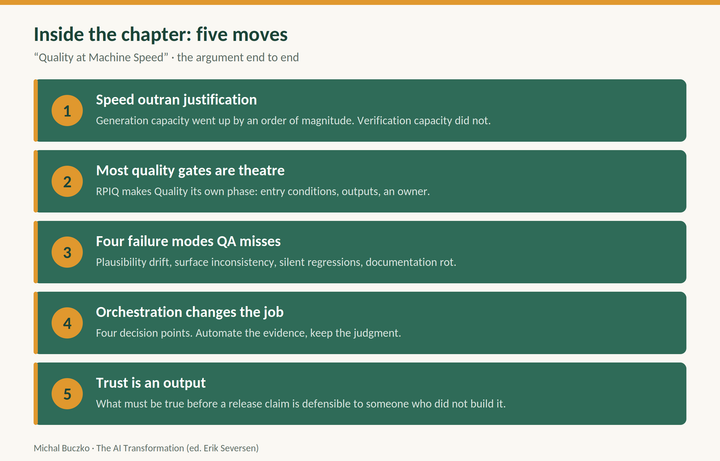
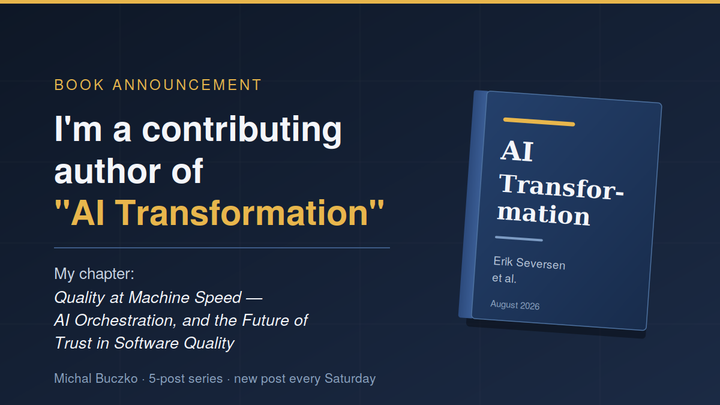
The Chapter, and the Company It Keeps Four weeks ago I put a claim on this blog: trust in software is produced, not felt. Last week I named the four ways AI-assisted delivery quietly stops producing it, and I promised that this post would do something different — walk through what is actually inside the chapter.
Re-post: "Leading In An Unpredictable World" > Three ways business leaders can drive both growth and innovation in today’s fast-evolving and unpredictable environment.By Jim Witham [https://chiefexecutive.net/author/jimwitham1/] -September 24, 2021 > Innovation can—and does—happen anywhere and at any time. > During the height of the pandemic, many businesses
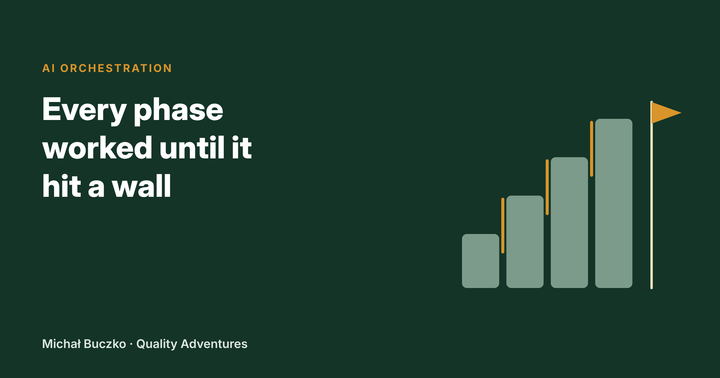
The Complete AI Orchestration Journey: From Claude Web Chat to Production iOS App The reference notes I wrote in November 2025, before BowSmith shipped: four phases, the original 17-agent team, the prompt template that cut context drift, and the failures. Lightly updated, with pointers to where the thinking went next.
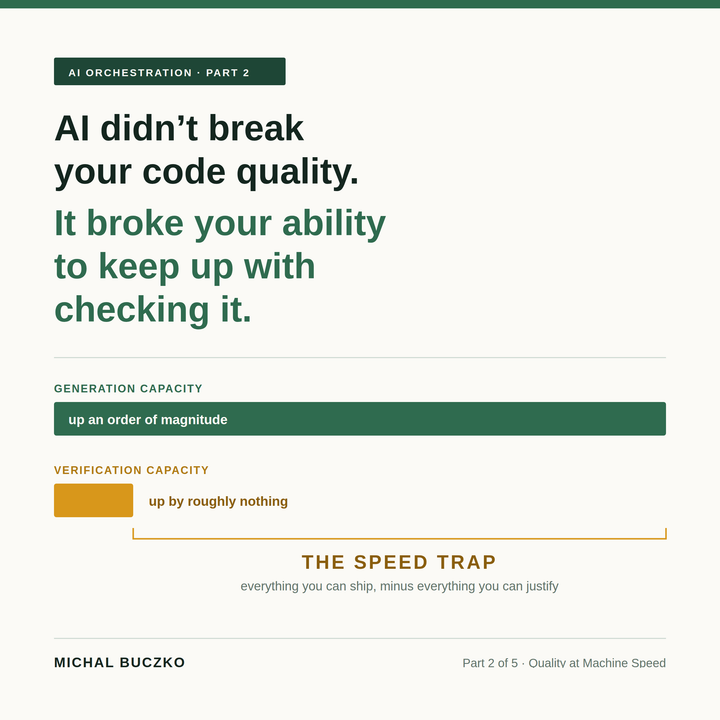
The Speed Trap: AI Made Us Faster Than We Can Justify Last Saturday I promised a deeper look at what actually changes when AI enters the delivery lifecycle. This is it. The short version: the hard part is no longer producing software. It is being able to say, with evidence, why the software you just produced is safe to ship.