The whole system on one page — live this week at CAST26
Week 7 (added — confirm before scheduling) of "From Vision to Production." Publishes Tue Aug 4, 2026.
If you're reading this, there's a decent chance you just heard me talk about it. Welcome — this post is the map. Six weeks of writing, and the eighteen months behind them, compressed onto a single page so you can see how the pieces fit before you decide which one to dig into.
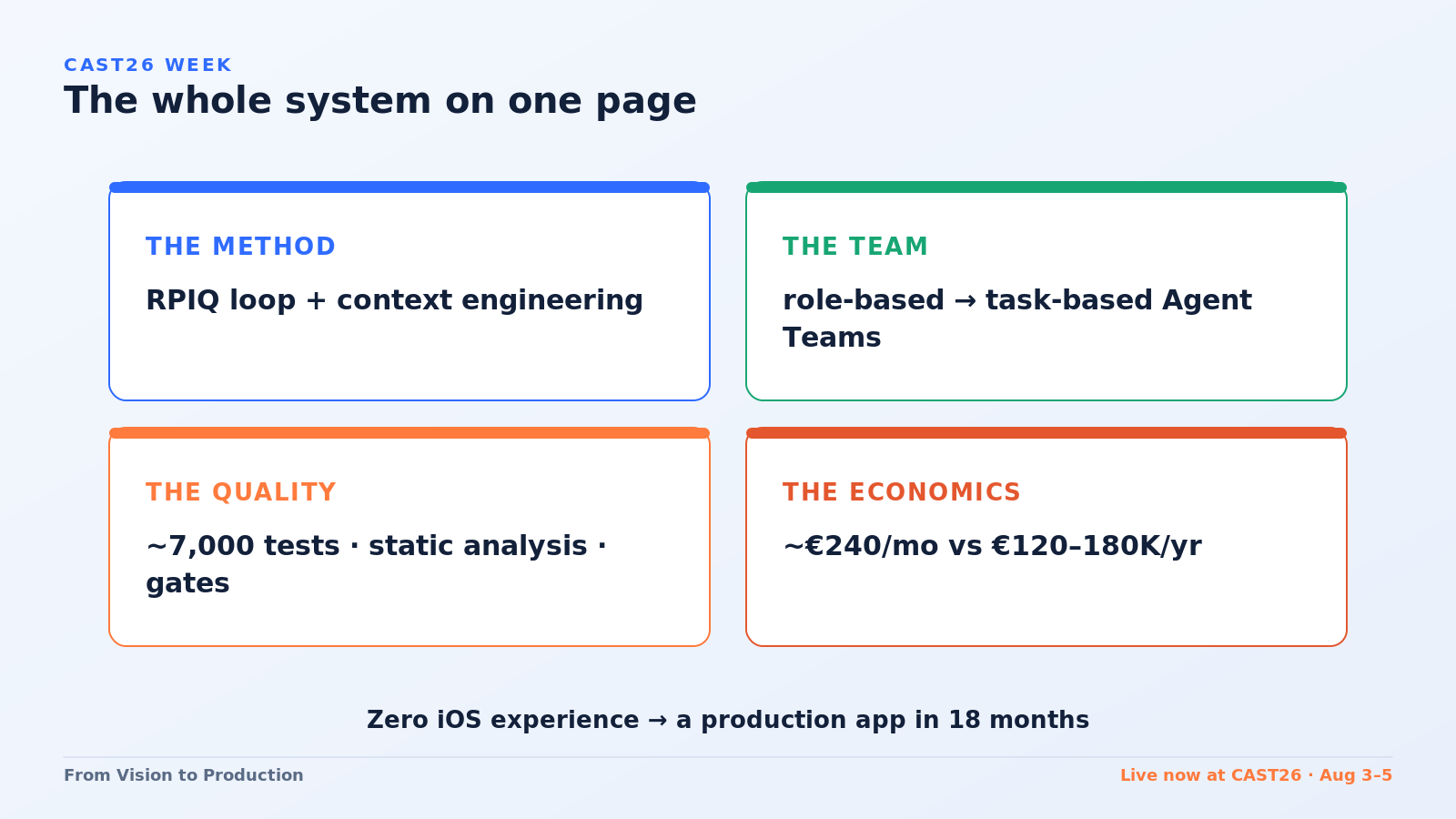
The four pieces
The method. RPIQ — Research, Plan, Implement, Quality — with context engineering and reusable templates that cut context drift by roughly 80%. This is the loop everything else runs inside.
The team. What started as seventeen role-based agents became task-based Agent Teams across multiple models — an organization I can't see but depend on, with work routed, reviewed, and gated.
The quality. Around seven thousand tests, a dual-repo structure that keeps them honest, static analysis for dead code and duplication, and cross-model review to break the confirmation bias a single model can't escape.
The economics. Roughly €240 a month for the whole stack, against €120,000–180,000 a year for the conventional equivalent — the collapse in the cost of trying that makes this reachable for a solo domain expert.
Read it in order
The arc rewards reading start to finish, but it's designed so you can enter anywhere:
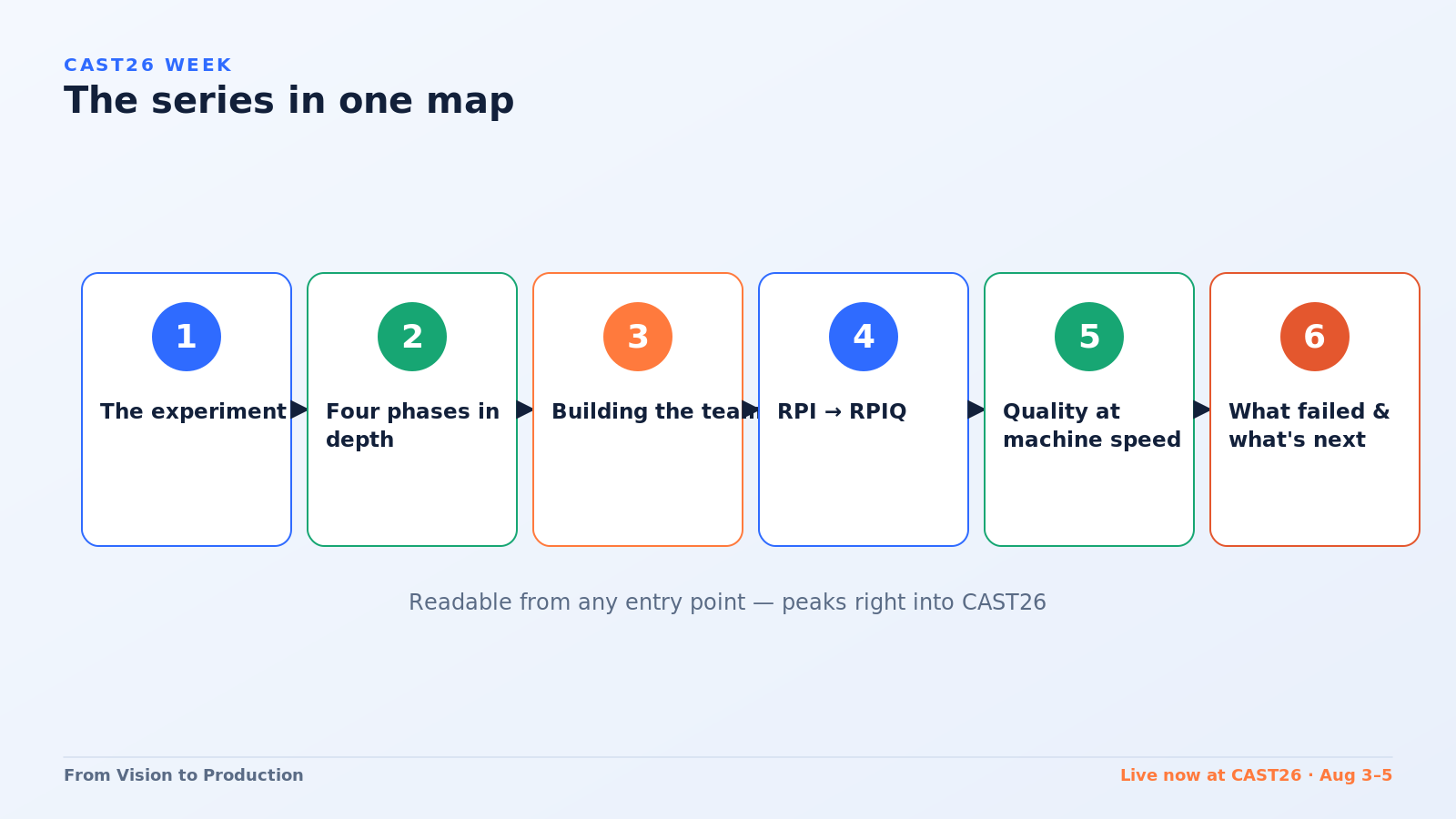
- The experiment — zero iOS experience to a production app.
- Four phases in depth — chat → Cursor → Claude Code → orchestration.
- Building the team — 17 role-based agents to task-based Agent Teams.
- The method — RPI → RPIQ, context engineering, prompt templates.
- Quality at machine speed — ~70,000 tests, static analysis, review bias.
- What failed, what it cost, what's next.
Happening now
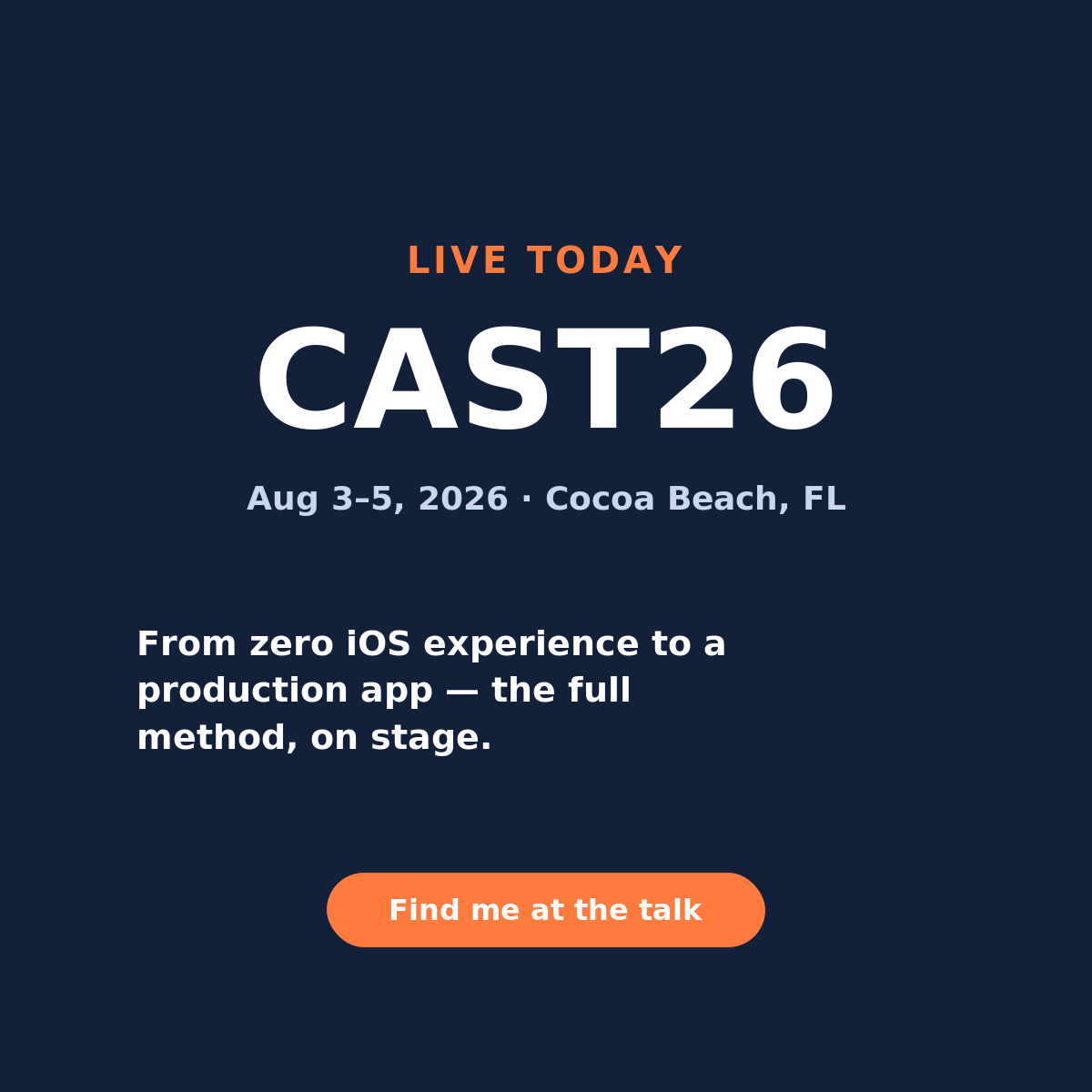
I'm at CAST 2026 (CAST26), August 3–5, in Cocoa Beach, FL — tutorials on the 3rd, the conference on the 4th and 5th. If a specific piece of this caught your attention, come find me between sessions. The failures are more useful than the wins, and the hard questions are the ones I most want to be asked.
Thanks for following the whole arc from vision to production.