Testing United 2025 - Milano
Milan closed my biggest speaking year. The question on the slide, whether AI can replace a feature team, stopped being rhetorical within months. Here is what that room asked, and what the experiment answered.
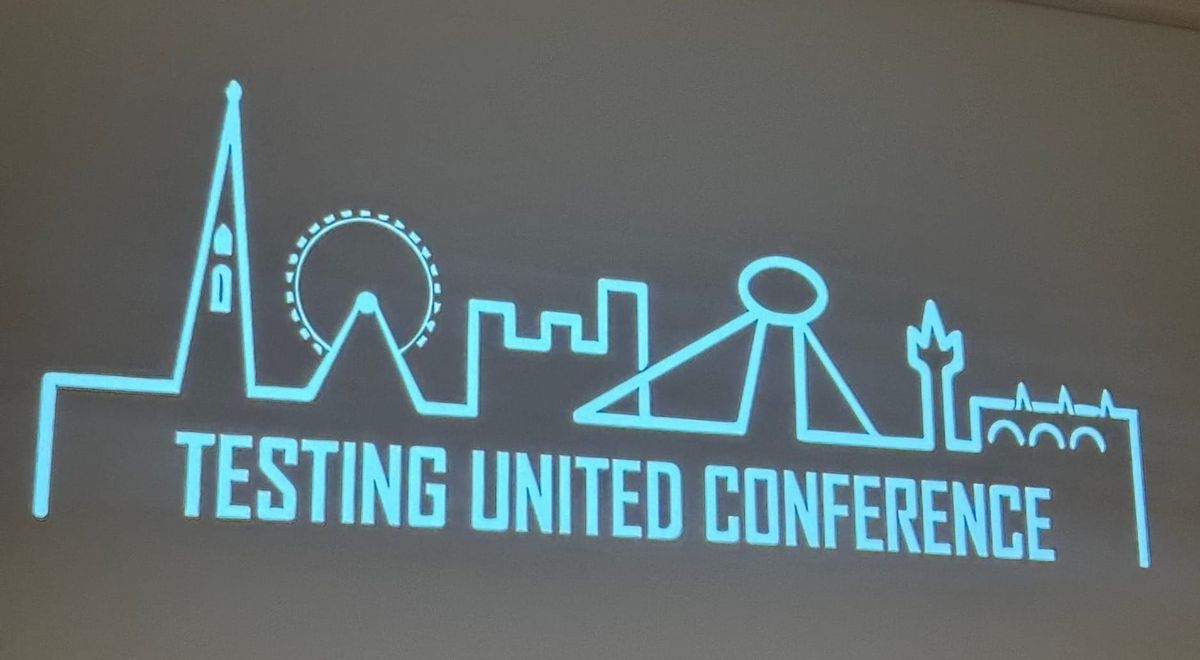
The last talk of a speaking year is not the same talk as the first. By the time you reach the final stage you have heard what four other rooms argued with. The slides might be the same, but the person giving them has changed.
Testing United in Milan rounded out 2025 for me. It closed a year of five conferences in four countries, alongside Wrocław, Istanbul, Columbus and Budapest. I never wrote it up at the time, partly because I didn't yet know how the story ended. Now I do.
A talk that has been through four rooms is a different talk
By Milan, the argument I had been carrying all year, that critical thinking has to stay human while AI drives up the volume of output, had already been through a home crowd that knew me well and a room in Istanbul that didn't know me at all. Every room pushes back in its own way.
What you get at the end of a run like that isn't polish. It's a shorter list of claims you're still willing to defend. A year's worth of questions is good at cutting out the ones you can't.
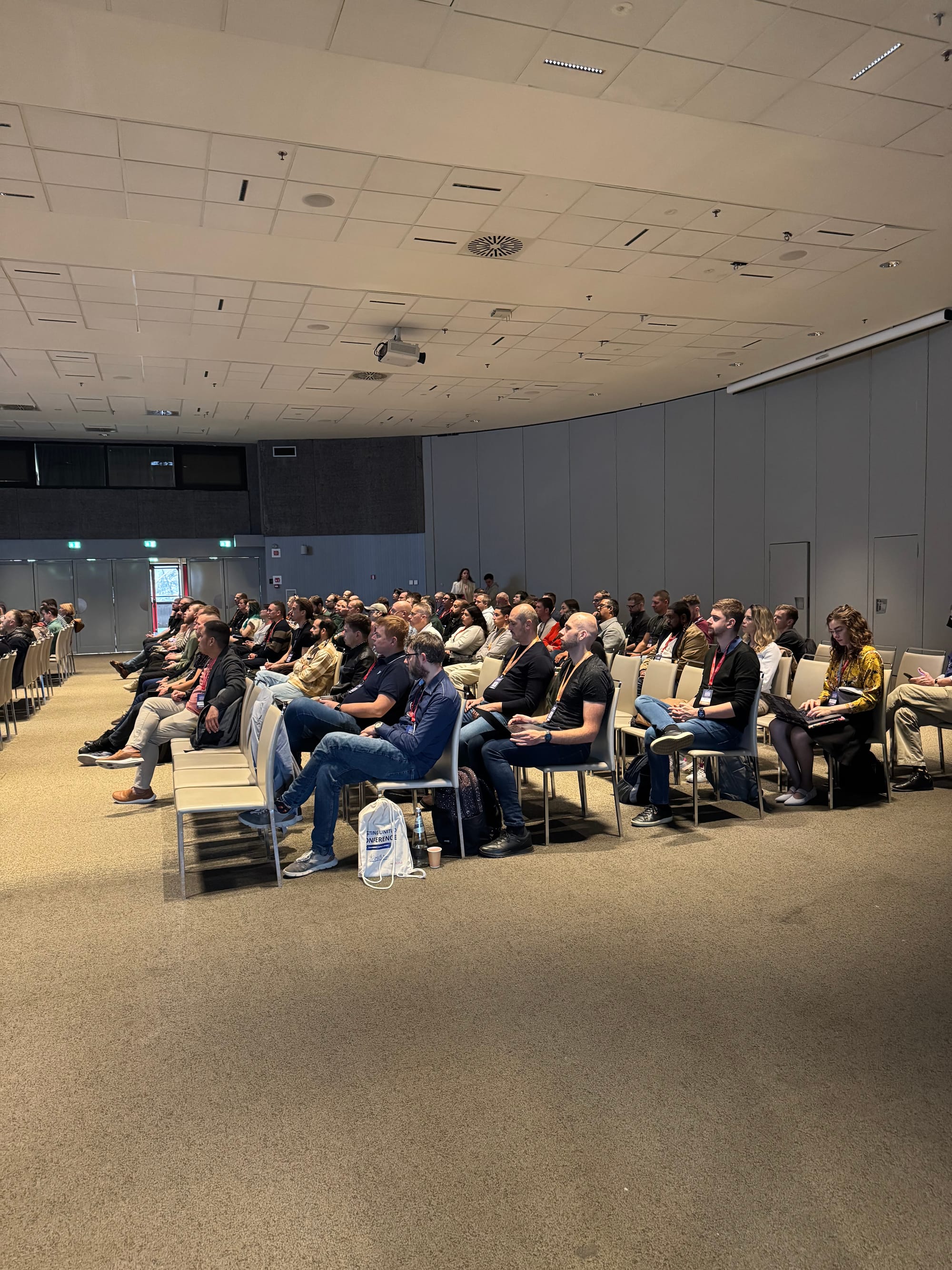
My talk was "Is AI the future of Software Delivery: Can it replace a Feature team?". What I came for, and got, was conversation with European quality professionals about where AI meets everyday testing practice.
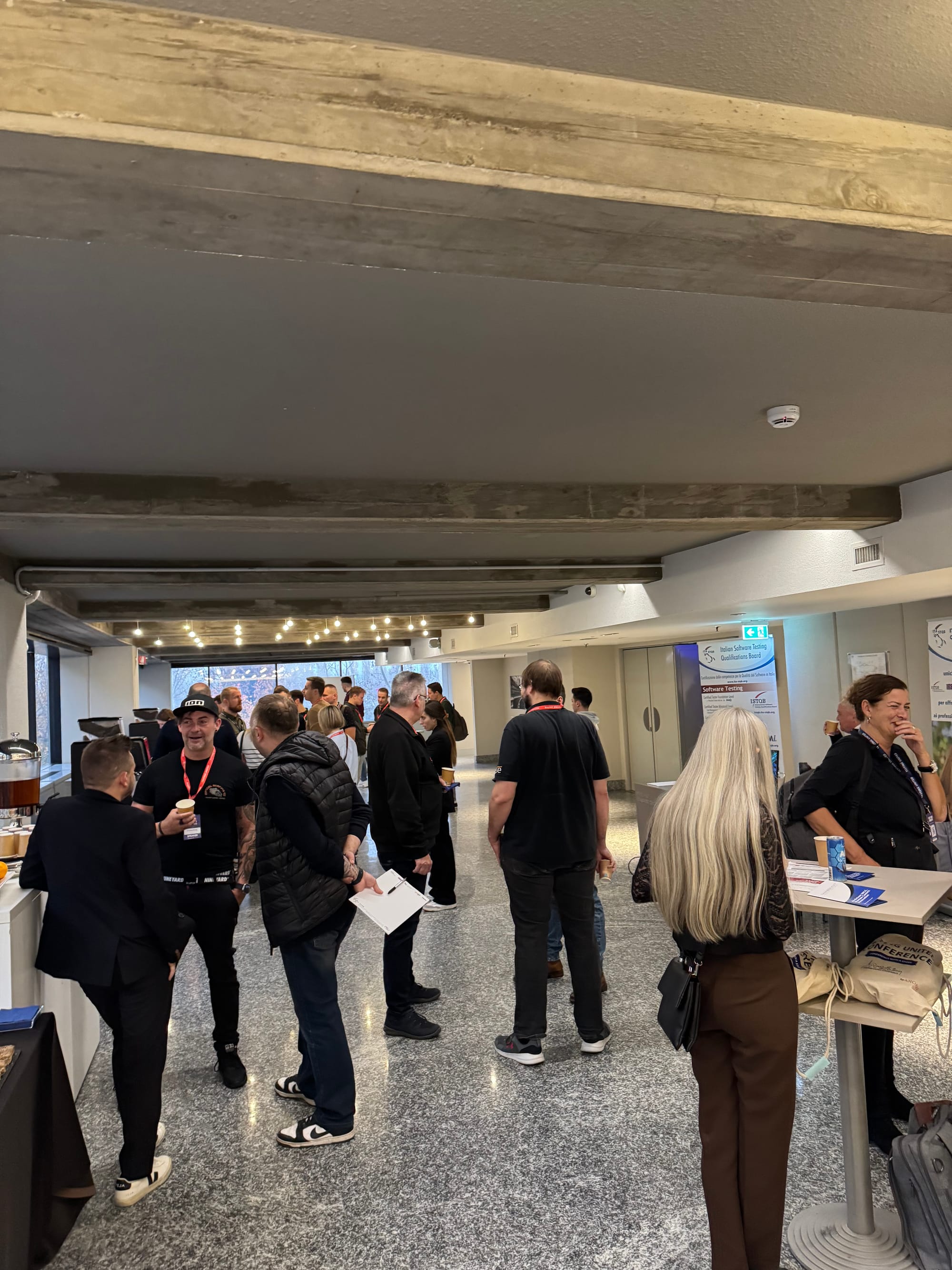
"Can AI replace a feature team?" stopped being a rhetorical question
When you put a question like that on a slide, it's meant to provoke discussion. You don't expect to have to answer it with your own evenings and weekends.
In the months that followed I did exactly that. I built BowSmith, a production iOS app, through AI orchestration, as one person with no iOS experience. In practice the whole delivery chain, from architecture to implementation to testing, ran through a three-tier stack of models with me acting as the quality gate. The app has been on the App Store since July 2026.
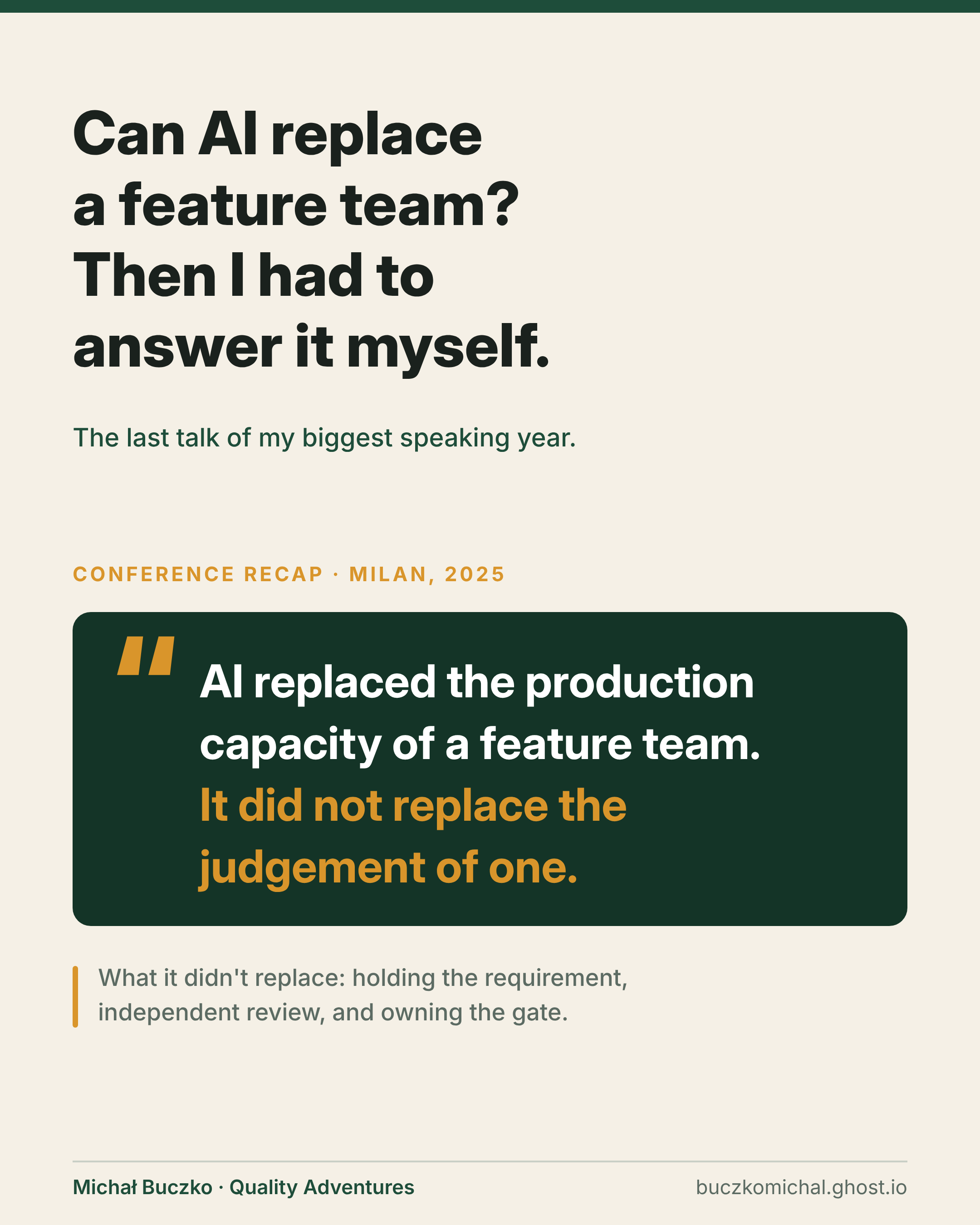
So here is the honest answer, a year later. AI replaced the production capacity of a feature team. It did not replace the judgement of one.
What it did replace: the typing, the boilerplate, the first draft of almost everything, and a very large amount of test code. What it didn't replace:
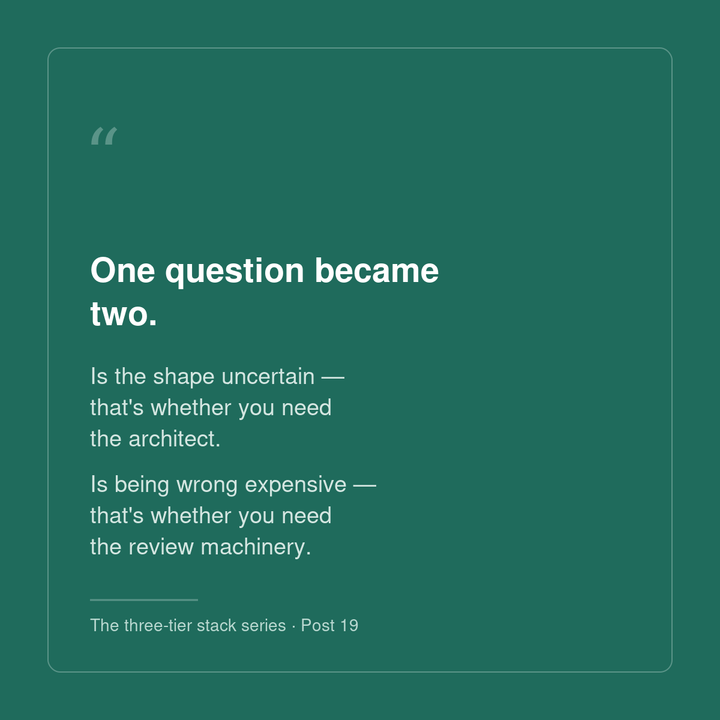
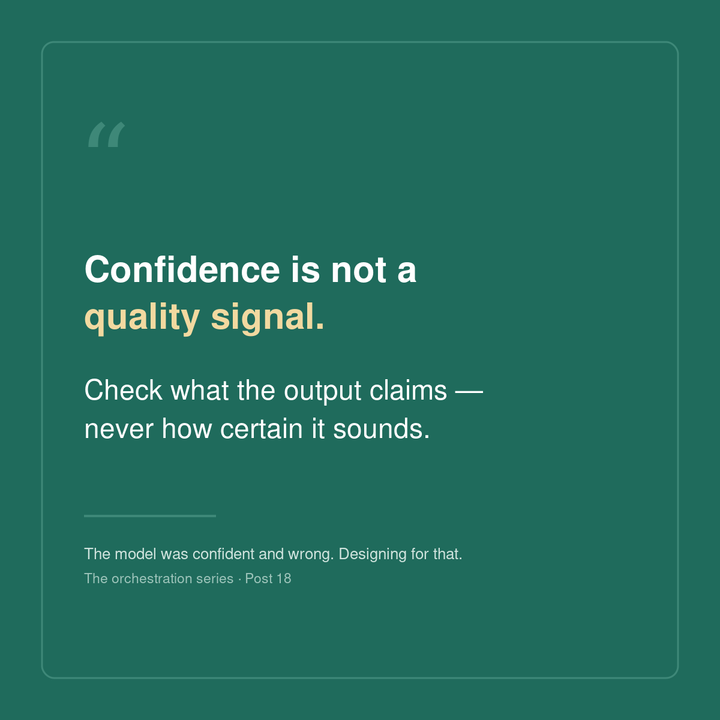
- Someone who knows what the requirement is. AI-generated tests adapted to the code, not to the requirements. Without a person holding the requirement, the suite only proved that the code agreed with itself.
- Someone who reviews with different eyes. Same-model review is confirmation bias. A feature team gets independent review for free because its people think differently. Working solo with AI, you have to design that independence on purpose.
- Someone who owns the gate. Every gate that worked had a named owner, a defined input, an explicit pass condition and a real consequence on failure. When any of those slipped, the gate turned decorative.
A feature team does those three things without anyone noticing. Take the team away and you notice very quickly. I wrote up the full accounting, including what failed, in the honest ledger.
The check: if your organisation is asking a version of the Milan question, list the three roles above and write a name next to each one for your AI-assisted workflow. If any line stays blank, the team hasn't been replaced. A function has been removed and nobody has noticed yet.
Why ending the year in Milan mattered
There is a practical reason to care about the last room of a year: it's where you decide which claims carry over. What I took from Milan into 2026 was a narrower, harder version of my position. Speed is not the achievement. Justified speed is. Everything I published this year, from the speed trap to the CAST talk, grew out of that narrower version.
Thank you to the Testing United organisers for letting me close my year in Milan. If your team is asking whether AI can replace part of it, I'd like to know which of the three roles you think is safe to drop. Reply, or book a Quality Coffee and we'll test that assumption together.