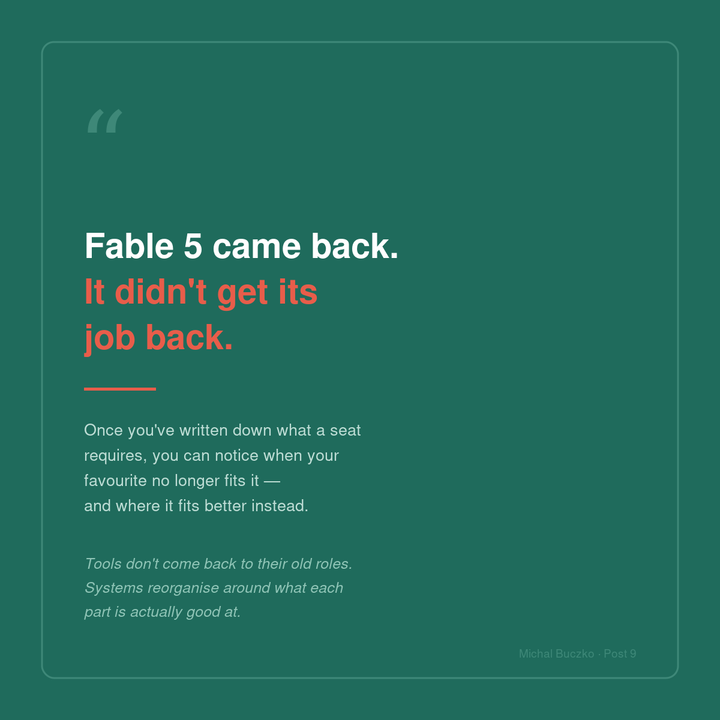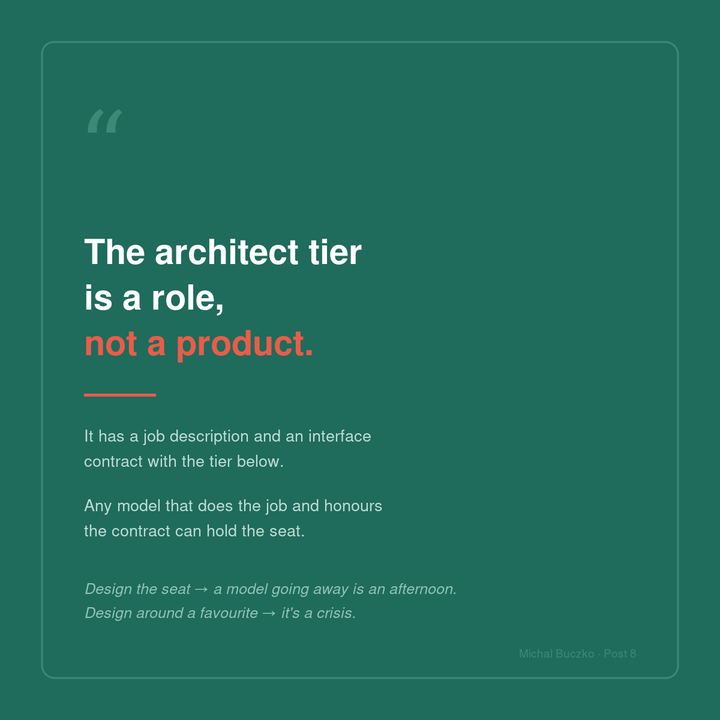
Opus Max as architect: what actually changed when Fable went away Opus Max as architect: what actually changed when Fable went away. Short answer: less than you'd think — if you know what the tier is for.
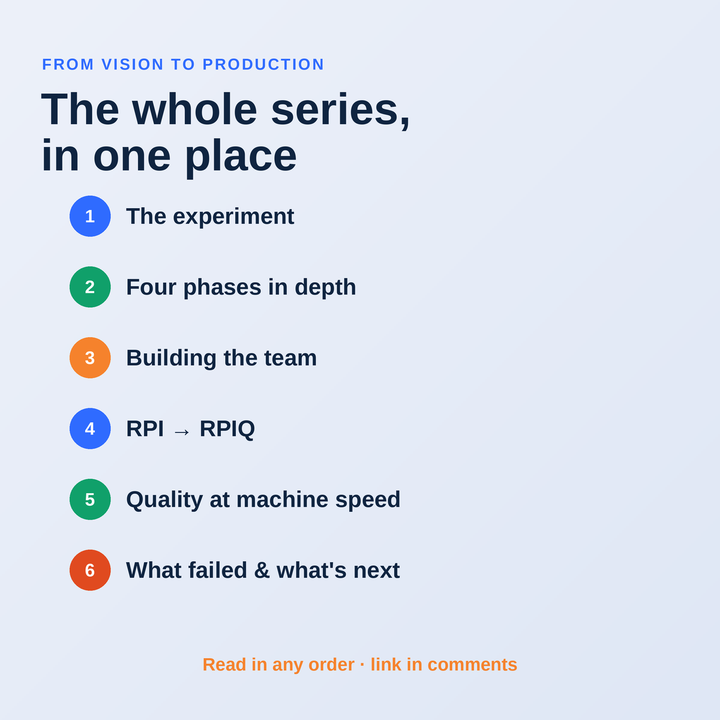
I lost my favourite tool and shipped faster anyway Fable was the best tool in my stack. Then it went unavailable, and I had to give the architect seat to Opus Max on short notice.What I got was faster hand-offs. This is the post about why — and why I think losing the tool made the work better, not despite the constraint but because of it.
What failed, what it cost, and where this goes — the honest ledger What failed, what it cost, and where this goes — the honest ledger
BowSmith, one feature, fully orchestrated: the case study This is one feature in BowSmith, shipped end-to-end through Opus Max (architect) → Opus (orchestrator) → Sonnet (workers), with the numbers. Not a toy. A feature I'd have budgeted the better part of a week for if I'd built it by hand.
Quality at machine speed: ~70,000 tests, static analysis, and the review bias nobody warns you about Quality at machine speed: ~70,000 tests, static analysis, and the review bias nobody warns you about
Where the three-tier stack was overkill: an honest retrospective Not a victory lap the opposite. Where the stack was overkill, where the hand-off cost more than it saved, and the one-question filter I now run before I stand up the architect tier at all.
RPI → RPIQ: the method that made AI build production software For the first stretch of this project I didn't have a method. I had a chat window, a vague plan, and a lot of optimism. It got me surprisingly far and then it fell over — not because the model wasn't capable, but because I wasn't giving it a system to be capable inside of.