The overengineering tax: when three tiers cost more than one Because that's a real failure mode, and it's the one nobody warns you about. Everyone warns you about doing too little. This is about doing too much, and calling it rigour.
The Complete AI Orchestration Journey: From Claude Web Chat to Production iOS App The reference notes I wrote in November 2025, before BowSmith shipped: four phases, the original 17-agent team, the prompt template that cut context drift, and the failures. Lightly updated, with pointers to where the thinking went next.
Stop prompting, start delegating There's a mode most people never leave, and it has clear symptoms. You write one giant instruction and cram every requirement into it. When the output is wrong, you re-roll the same message with slightly different wording, like shaking a vending machine.
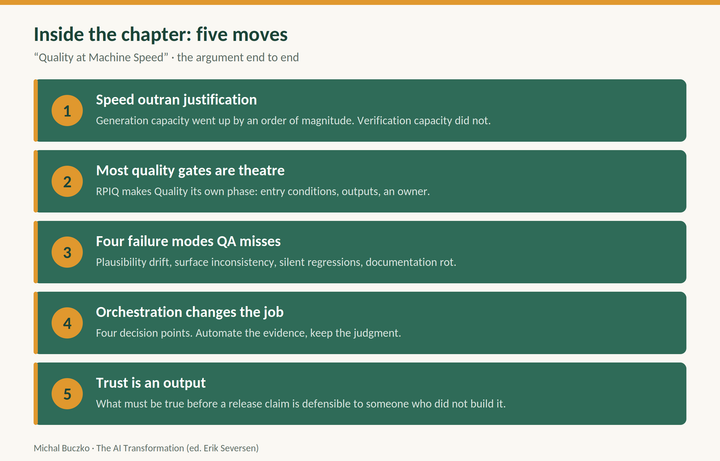
The Chapter, and the Company It Keeps Four weeks ago I put a claim on this blog: trust in software is produced, not felt. Last week I named the four ways AI-assisted delivery quietly stops producing it, and I promised that this post would do something different — walk through what is actually inside the chapter.
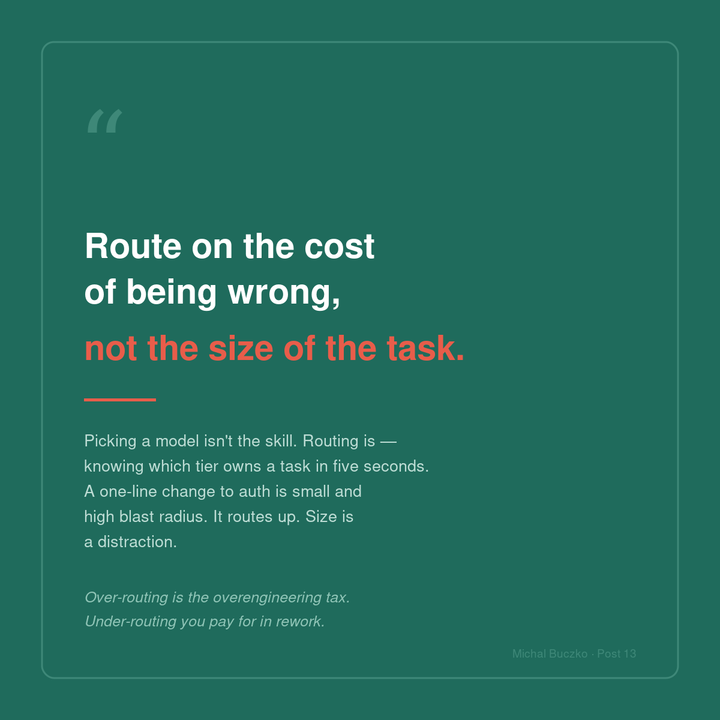
Routing rules: which tier gets which task Because here's the thing the token argument clears the ground for. Once you stop chasing the single best model, and stop pretending you can price the decision to three decimal places, the real skill comes into focus. It was never "which model is best." It's which task goes where.
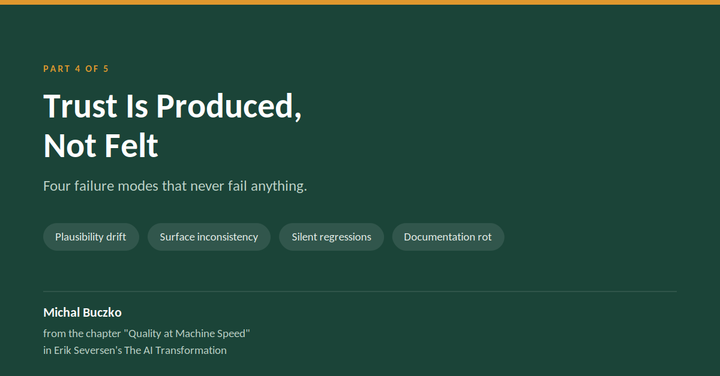
Trust Is Produced, Not Felt Most teams treat trust as something that settles over a codebase — a feeling that builds up after enough green pipelines and enough uneventful releases. That is not trust. That is familiarity, and it feels identical right up to the morning it doesn't.
A Gate That Works, and a Gate That Only Looks Like One RPIQ, what belongs at each stage of a quality gate pipeline, and the four questions that separate a gate with teeth from expensive decoration.